
By Shanna Lee, Senior Director, US Communities, DataKind | Jenrose Fitzgerald, Program Manager, Data for Social Impact, Washington University in St. Louis | Dan Ferris, PhD, Co-Director of Policy Education and Practice; Associate Professor of Practice, Washington University in St. Louis
Data doesn’t create impact. People do.
That belief shaped Data Tools for Everyone, a four-part webinar series co-hosted by DataKind and Data for Social Impact (DSI), an initiative of the Center for Social Development at Washington University in St. Louis.
Nearly 500 people attended the series. One-third were based in the St. Louis metro region. The top sectors represented were education, health, and economic mobility.
Notably, from our registrants:
- 42% said working with data is their primary role
- 34% said data informs their work but isn’t their main focus
That means roughly three-quarters of participants engage with data directly in their roles, while about one-quarter come from roles where data is less central to their day-to-day work.
That mix reflects something we believe deeply at DataKind: data work is strongest when it includes the people closest to the problem. Real impact requires more than technical expertise – it requires collaboration across program, policy, and leadership teams. For DSI, this represents their core belief that impact is greatest when communities have been supported in cultivating the relationships, context, and capacity to act.
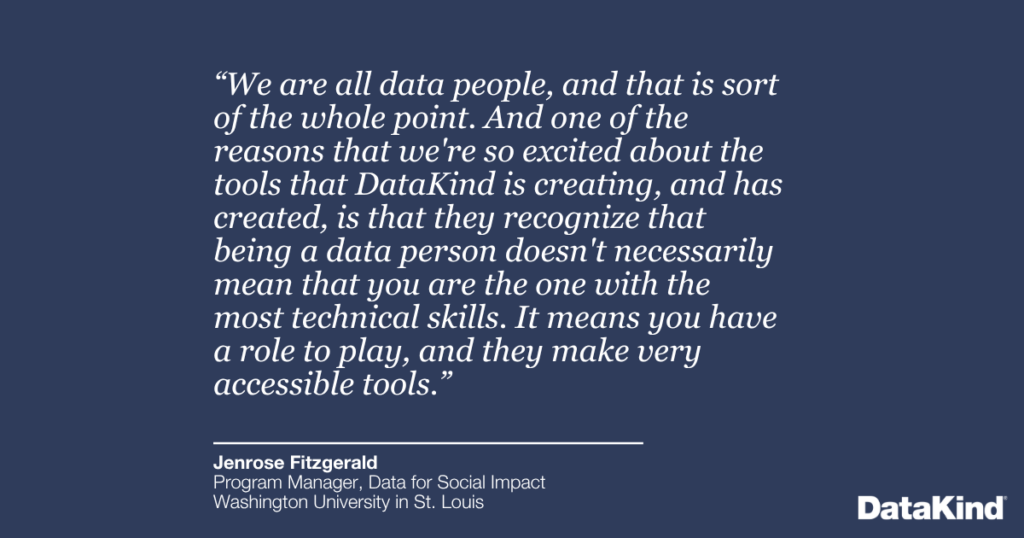
As Jenrose Fitzgerald from DSI shared during the second session:
That’s exactly the future we’re building toward.
Start with impact, not the dashboard
Across all four sessions, one theme kept surfacing: don’t start with the data. Start with the why.
Instead of asking first, What data do we have? we encouraged participants to ask:
- What change are we trying to create?
- Why is this important?
- Who will benefit?
Only then should the how we move forward with tools and analysis enter the picture.
This impact-first approach prevents a common trap in the social sector: investing time and resources in complex dashboards that look impressive but don’t meaningfully move programs, funding, or partnerships forward.
Lowering the barrier to entry
Throughout the series, we demonstrated the DataKind U.S. Communities Platform, building on our work to transform public and local data into clear, place-based insights.
The platform is designed to make complex analysis accessible to program leaders, funders, and cross-sector collaborators – not just to analysts.
As one attendee, Ethan Bradley, noted:
“This lowers the barrier of entry for this type of analysis. It takes me forever in Tableau, and this seems more beginner friendly.”
That’s the point.
At DataKind, we’re not building tools for data experts alone. We’re building products that help entire teams see patterns, surface gaps, and act – faster and with greater confidence.
Sophistication matters. But adoption matters more.
Data moves at the speed of trust
The series concluded with a practitioner roundtable focused on what makes data-driven collaboration actually work. The answer wasn’t just better tools. It was process, governance, and trust.
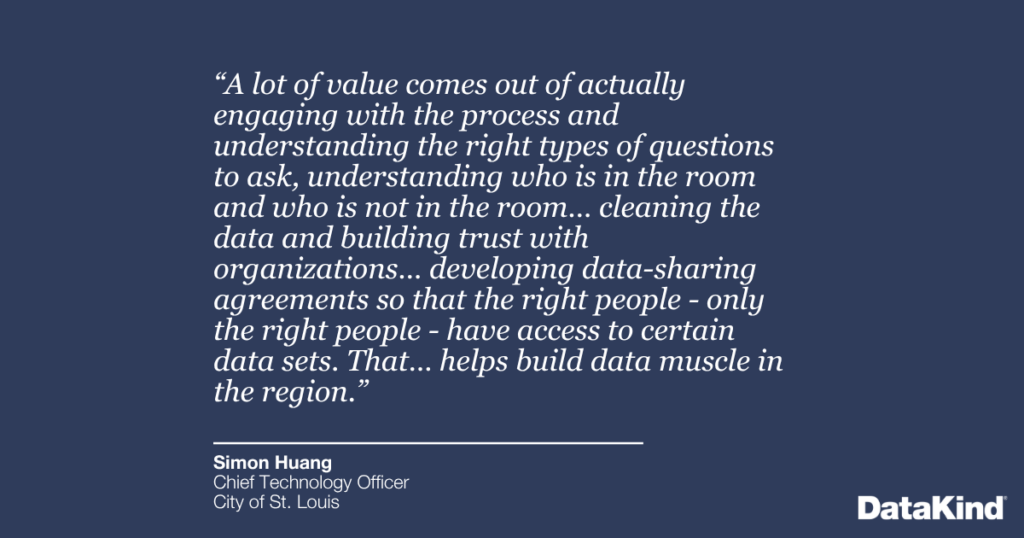
Simon Huang, CTO for the City of St. Louis, captured it well:
Technology can accelerate insight. But sustainable impact requires relationships, clarity, and shared ownership.
That’s why DataKind’s product strategy doesn’t stop at building tools. We design for real-world implementation – where accessibility, governance, and collaboration are just as critical as analytics. As DataKind’s partnership with DSI has shown, the point isn’t just technical skill. It’s translation, trust, and helping people see that they already have a critical role to play.
Building tools for the people doing the work
The Data Tools for Everyone series reinforced what we’ve long believed:
- Data practice includes everyone
- Impact should guide analysis
- Accessible products unlock participation
- Trust enables action
As DataKind continues to evolve, we’re focused on creating tools that meet practitioners where they are – and help them move from insight to action.
That’s the work ahead for DataKind and DSI alike: continuing to bridge innovative tools and local practice, so that more communities can move from data curiosity to confident, connected action. Because data is only powerful when more people can act confidently based on insights.
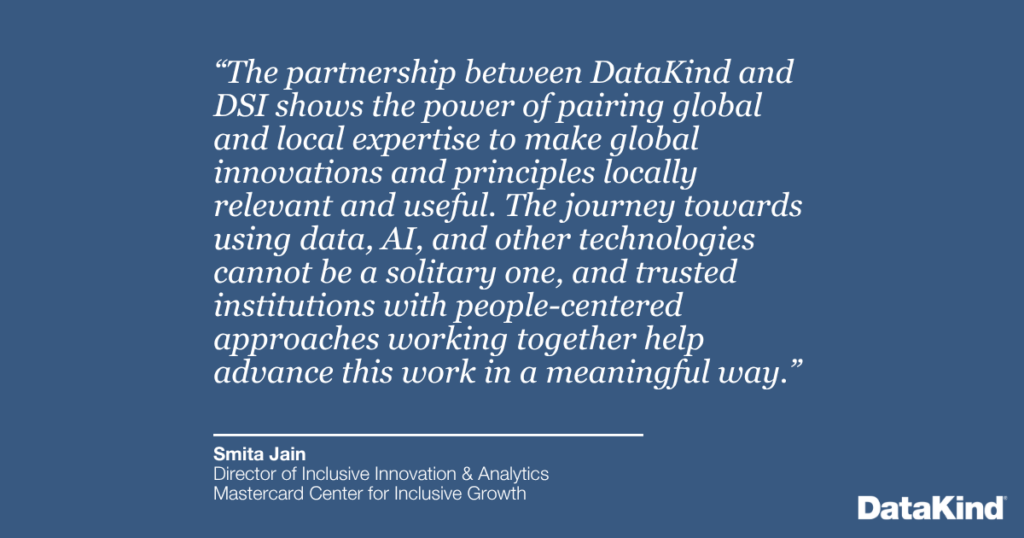
Smita Jain, Director of Inclusive Innovation & Analytics at the Mastercard Center for Inclusive Growth, emphasized the importance of this partnership:
Watch the full webinar recordings to explore these themes and see how the U.S. Communities Platform can support your work.
This program is made possible thanks to the generous support of the Mastercard Center for Inclusive Growth.
Header image above courtesy of iStock.
Join the DataKind movement.
- Interested in sponsoring a project? Partner with us.
- Interested in subscribing to our newsletter? Sign up.
- Interested in supporting our work? Donate here.