Research consistently shows that food insecurity and poor health are closely linked to economic instability – affecting everything from employment continuity to long-term mobility. Addressing these challenges requires more than isolated interventions or static reports; it requires shared data, aligned indicators, and sustained collaboration across organizations. In Central Florida, the Health and Hunger Task Force, led by Second Harvest Food Bank of Central Florida, has been bringing partners together to better understand how food access, health outcomes, and economic stability intersect at the community level.
As a co-developer of DataKind’s Ladder platform, Second Harvest partnered with DataKind to move beyond siloed datasets toward a shared, place-based view of community needs. While Ladder provided the technical foundation to explore and visualize data together, the collaboration itself – aligning on indicators, building trust around data sharing, and clarifying how insights would inform action – proved just as essential. This partnership illustrates a core lesson shaping the next evolution of DataKind’s platform work: meaningful impact starts with shared understanding, and technology works best when it strengthens collaboration rather than replaces it.
To explore how this work took shape in practice – and what it’s revealed about building shared data strategies across organizations – we spoke with Angela Corona, MPH, CPH, Health Systems Manager at Second Harvest Food Bank of Central Florida. Angela leads the Health and Hunger Task Force and has been closely involved in the co-development of Ladder, bringing a public health and practitioner perspective to how shared indicators, data infrastructure, and trust-building come together on the ground.
As a co-developer of Ladder, what collaboration challenge were you most focused on solving alongside DataKind and the Health and Hunger Task Force?
Within the Health and Hunger Task Force, we wanted the ability to do two things. First, we wanted to be able to look at multiple datasets together. Our work is at the intersection of health outcomes and food insecurity. Being able to easily see those data points together helps us target resources more effectively. Second, we wanted a shared space where we could view the same data and share it with each other so HHTF members could find opportunities to strategically partner together.
What have you learned about facilitating collaboration across local organizations by using Ladder as a shared data platform?
I’ve learned that the shared data platform is a key tool, but not the whole strategy. It gave us the infrastructure to move our data strategy forward, but we still have to invest time to determine what we want to put into Ladder and how we will use the tool together as we collaborate.
How has having a single, shared platform changed the quality or pace of conversations among partners working on food insecurity, health, and/or economic stability?
Having one single, shared platform has allowed us to develop a concrete plan and strategy for sharing data with our community partners. What once felt abstract is now something we can plan for in concrete, actionable ways. With an actual tool in place, we’re able to develop a clear strategy for how data is shared between community partners and use data to support more coordinated, effective work.
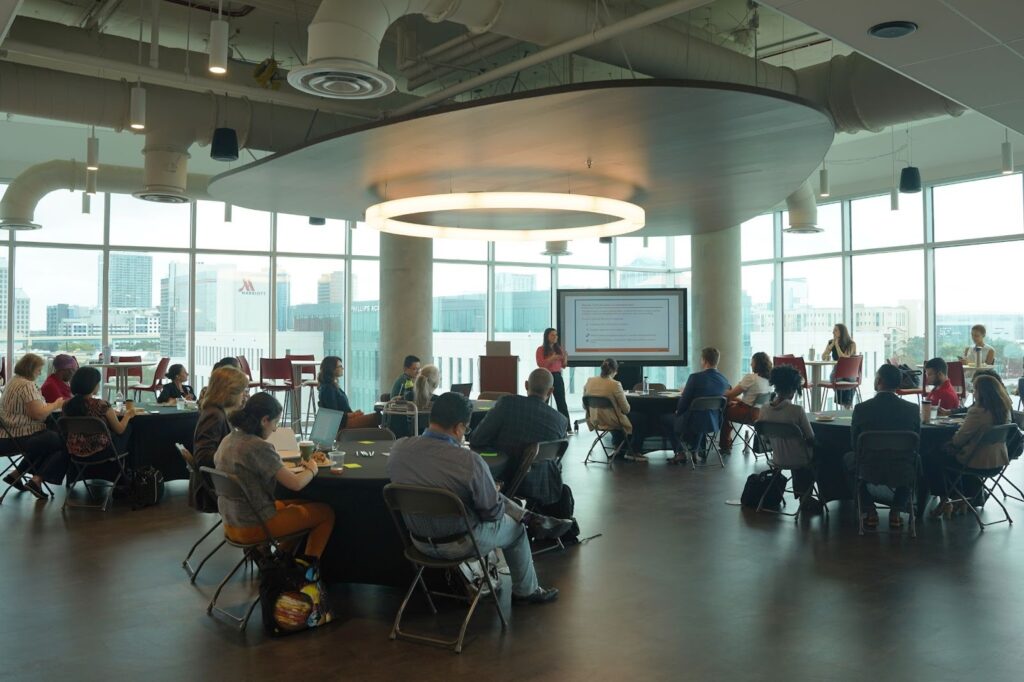
The Health and Hunger Task Force’s work focuses on health and food access, but those issues are deeply connected to broader economic outcomes. How are you thinking about the role this work plays in supporting long-term economic stability and mobility in the communities you serve?
Food insecurity and economic mobility are deeply connected. Economic instability is a driver of food insecurity, and experiencing food insecurity can, in turn, make it harder for people to move towards greater economic stability. Addressing food needs helps meet an immediate, basic need while also creating the stability people need to take on longer-term economic mobility challenges. These issues don’t exist in isolation—they reinforce one another, and solutions need to recognize that interconnectedness. Our new data strategy, Common Metrics, integrates other health-related social needs, such as income and employment indicators, to help us understand trends in our community and connect the dots across programs and HHTF initiatives. Ladder allows us to bring all of those intersecting datasets together in a seamless way.
The Health and Hunger Task Force’s Common Metrics initiative has been central to this work. How did indicator alignment shape how Ladder was designed and used?
It actually worked the opposite in some ways. We had a broad understanding of what we wanted in terms of collaborative data sharing during the Ladder design process, but didn’t formalize our Common Metrics strategy until after Ladder launched. We wanted to make sure we understood all of the functionality and scope of Ladder before diving into the data strategy component for HHTF.
Why is embedding shared indicators into a tool like Ladder so important for sustaining collaboration across organizations and sectors?
Embedding shared indicators into a tool like Ladder makes the data come alive. It extracts data from a static report, where many of these indicators had traditionally ended up, and makes it actionable at both the organizational and cross-organizational levels. When we can visualize the data on a map, overlay it with other indicators of interest, and add our own organizational data, we can better understand what’s happening in our community in a deeper, more meaningful way.
You recently spoke at the final webinar in the Data Tools for Everyone series with DataKind and Data for Social Impact at Washington University. What lessons from your local experience felt most relevant to share with a national audience?
The most relevant part of the Data Tools for Everyone webinar for us was our intentional, phased approach to integrating Ladder into our work with the HHTF. We have an incredibly collaborative group. Having a joint data strategy, asking members to add data into a shared system, and developing a collective strategy will be an even deeper form of collaboration. For now, we’re taking it slow and building engagement and trust along the way. We recognize that Ladder is just one piece of a larger strategy to get this work done.
What did you hear from practitioners in other regions during that webinar that reinforced – or challenged – your approach to collaboration and shared data?
Hearing from all of the different speakers at the webinar really reinforced for me the idea that integrating data across an organization or collective is a process. There’s so much work to make sure people understand what data they have, how it can be transformed to fit in a tool like Ladder, figuring out the right questions to ask, etc. While all those pieces might seem daunting, to me, it feels like putting together a giant puzzle. It is a helpful reminder to myself to recognize that each piece matters and helps create the bigger picture.
From your perspective, what role has DataKind played as a partner and product innovator throughout the co-development of Ladder?
The DataKind team was instrumental in helping translate our real-world problem into a tech solution that actually works for us. Their team was intentional about seeking feedback along the way to make sure that the tool they were building would meet the needs of our organization and our community.
As Ladder prepares for its next phase, what excites you most about its potential to support deeper collaboration and greater impact in communities?
I’m most excited about Ladder’s ability to bring together sectors that may not traditionally work together. I’m excited to see what happens when you can get people from housing and transportation and food security into a shared tool and see what insights happen and collaborations take shape. I’m looking forward to seeing and hearing how Ladder is being used in communities across the country and to learn from others who might inform our approach here in Central Florida.
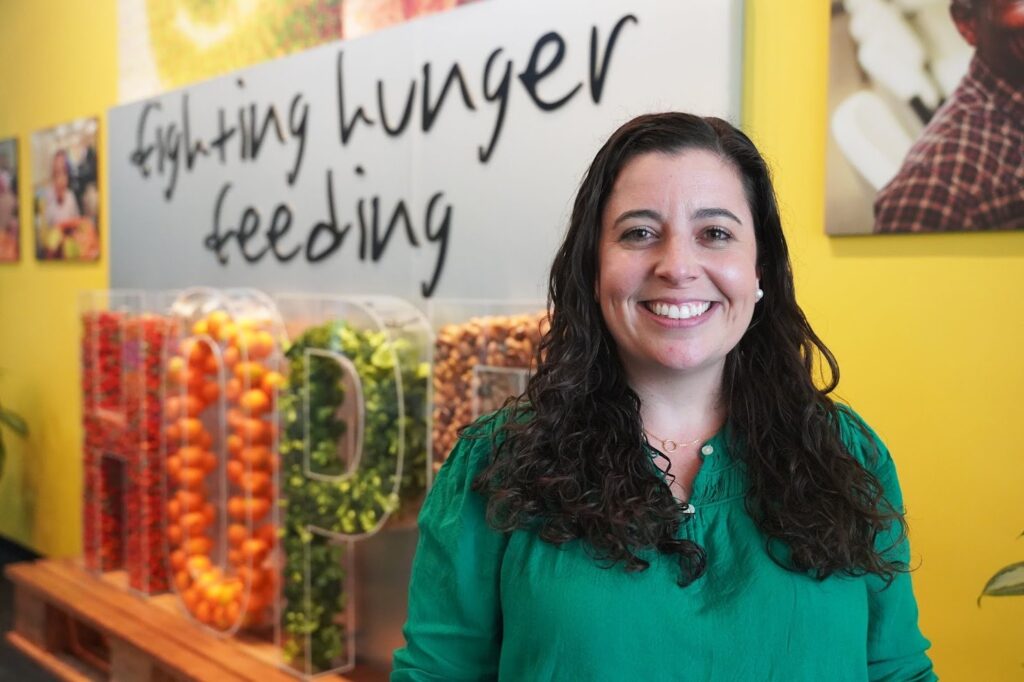
Angela Corona, MPH, CPH, Health Systems Manager, Second Harvest Food Bank of Central Florida is a public health professional passionate about improving health outcomes through cross-sector collaboration. She leads the Health and Hunger Task Force, a coalition advancing food-as-medicine strategies to support individuals experiencing food insecurity. Angela holds a Master’s in Public Health and brings over ten years of experience in community programming and partnership development.
This program is made possible thanks to the generous support of the Mastercard Center for Inclusive Growth.
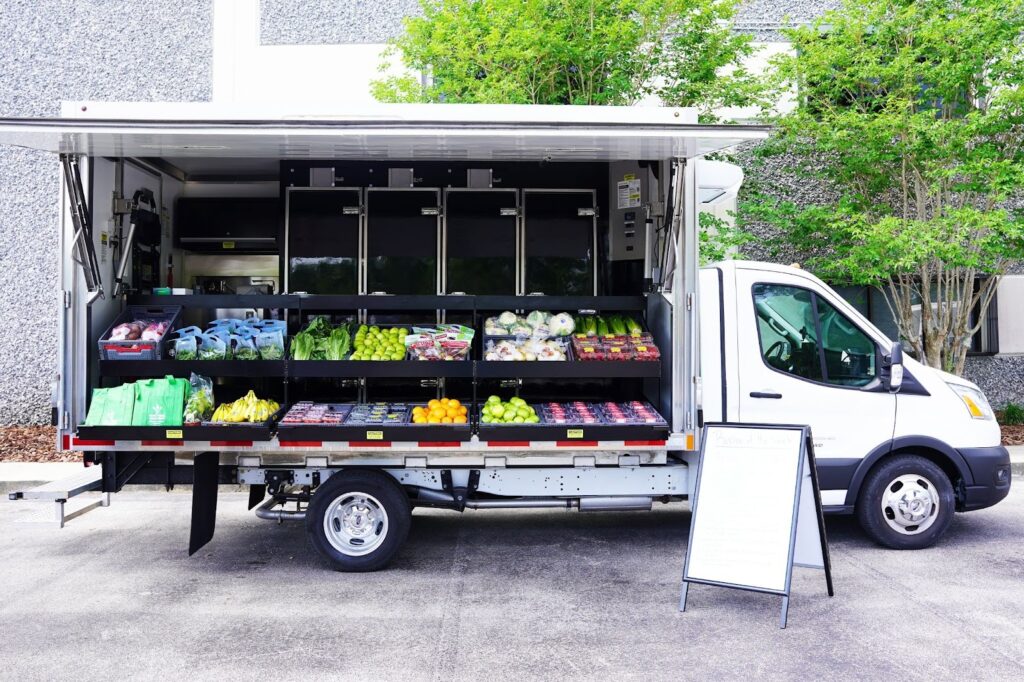
Images above courtesy of Second Harvest Food Bank of Central Florida.
Join the DataKind movement.
- Interested in sponsoring a project? Partner with us.
- Interested in subscribing to our newsletter? Sign up.
- Interested in supporting our work? Donate here.
Quick Links
- Making Data Useful: Designing for Impact When Resources Are Limited
- Data Tools for Everyone: Connecting Strategy, Practice, and Impact Webinar Series
- Innovating With Intention: What We Learned About Growth in 2025
- Scaling What Works: DataKind’s Next Step Forward
- Introducing Ladder: A New Way to Harness Community Data for Impact