GUIDE is moving from a shared, open-source data model to its next phase: bringing the higher education community together to explore practical applications, shape the model, and advance more connected data for student success. Led by DataKind in collaboration with TechChange, GUIDE invites institutions, practitioners, and technology providers to help shape what comes next, beginning with its first virtual quarterly convening.
Higher education institutions generate enormous amounts of information about students and their experiences – from enrollment and course activity to academic progress, advising, financial aid, and career pathways. But that information often lives across disconnected systems, making it difficult to see the full picture of a student’s journey or use data to develop better tools and services.
That challenge is becoming increasingly consequential. Institutions are looking for better ways to understand student progress, strengthen student support, and make informed decisions while navigating complex technology environments and growing interest in AI-enabled tools. Fragmented information also makes it harder to build new tools on a consistent, trustworthy data foundation.
What might become possible if those systems could speak a more common language?
That’s the opportunity behind the Global Unified Initiative for Data in Education (GUIDE), a collaborative effort led by DataKind in partnership with TechChange. GUIDE is developing and supporting an adoptable, open-source public-good data model designed to help higher education institutions connect information across systems and create a stronger foundation for student success, interoperability, and responsible AI.
With the GUIDE data model and repository now publicly available, the work is moving into an important next phase: helping institutions, practitioners, researchers, and technology providers explore what a shared data foundation can make possible – and how they can help shape it.
A shared foundation opens new possibilities
A common data model is not an application or a replacement for the systems institutions already use. It’s a shared structure for organizing and connecting information across those systems.
That distinction matters. When data can be brought together in more consistent and meaningful ways, institutions and developers have greater opportunities to ask new questions, identify patterns, and create tools that respond to the needs of students and the people who support them.
At DevFest Florida 2026, DataKind brought GUIDE into a hands-on setting, inviting participants to explore the data model using synthetic sample data modeled on two Central Florida institutions. The starter package included 1.36 million synthetic records, the GUIDE documentation, and an interactive model explorer.
Participants were encouraged to imagine and prototype applications that could produce new insights from data that is often spread across disconnected systems. Three examples illustrate the range of possibilities:
- Reconstructing a student’s journey. An academic advisor might need to understand how a student’s experience has unfolded over time – not just their current grades or degree status. By connecting records related to courses, academic progress, advising appointments, alerts, and support services, an application could help advisors see a more complete picture and understand what happened at key points along the way.
- Identifying patterns across student experiences. Institutions could explore common pathways through academic programs, including credits earned, course withdrawals, repeated courses, and transfer credits. Visualizing those patterns could help advisors and institutional leaders identify where students encounter barriers and where additional support may be useful.
- Exploring different paths to completion. Students could use connected academic information to consider different course plans and schedules. What might happen if they take a lighter course load, add a summer term, or change the order of courses? A tool built on a shared data foundation could help make those possibilities easier to explore.
These are examples of what developers and institutions can begin to investigate – not prescribed use cases. The model is intended to support a range of applications, including ideas that haven’t yet been imagined.
Moving from a shared model to practical use
Making a data model publicly available is an important milestone. But its value ultimately depends on whether people can understand it, apply it in different environments, and contribute to its continued development.
That requires more than publishing a specification. It means creating opportunities for institutions and technology providers to test the model against real-world needs, identify gaps, share implementation experience, and help determine what should come next.
It also means recognizing that institutions have different starting points. Their technology environments, data practices, staffing, and resources vary widely. A model that is useful in practice needs to be adoptable across those different contexts – not just technically sound in theory.
These questions are part of a broader conversation DataKind has been having across higher education and the open-source ecosystem this fall, including at EDUCAUSE, the Achieving the Dream Data & Analytics Summit, Open Source Congress, Open Source Luxembourg, All Things Open, and MozFest.
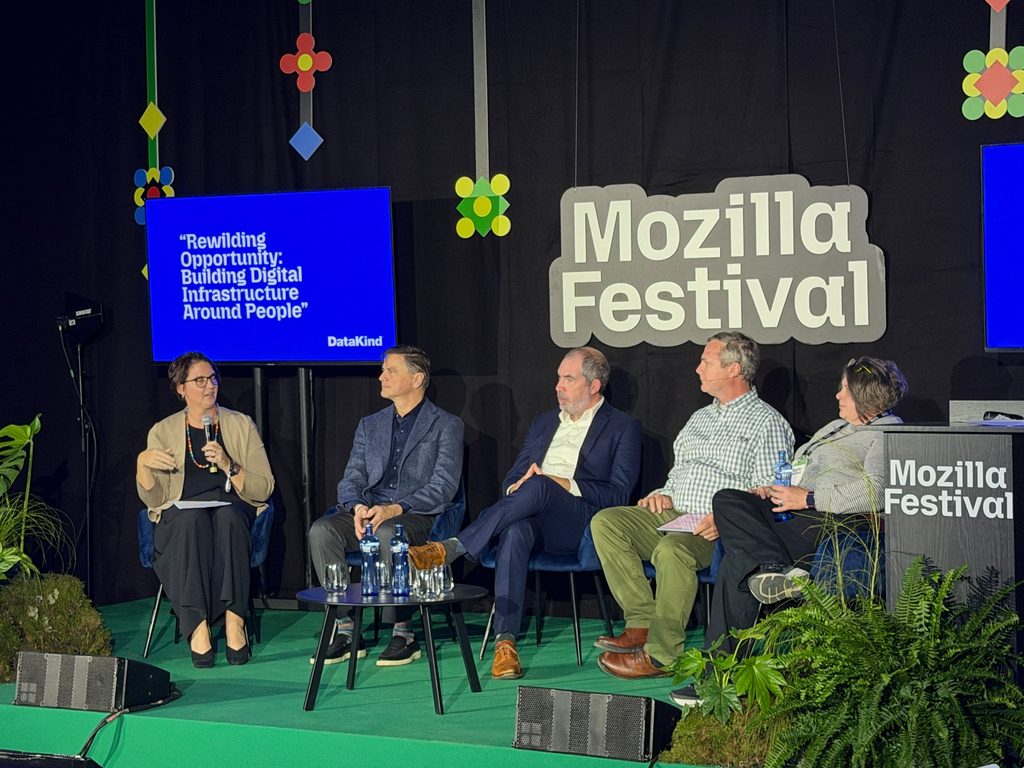
DataKind at MozFest brought together leaders in open technology, education, and digital credentials to explore what it takes to build infrastructure that puts people – not platforms – at the center.
Across this work, one principle remains central: shared infrastructure creates opportunities, but people and institutions determine how those opportunities translate into meaningful change.
Building the next phase together
GUIDE is designed to be shaped by the community it serves. Higher education institutions, practitioners, researchers, technology providers, and others all have a role to play in making the model useful, sustainable, and responsive to the field.
With the GUIDE website and public data model repository now available, there are concrete ways to begin engaging:
- Explore the GUIDE data model: Review the structure and resources in the public repository.
- Experiment with the model: Use the available materials to explore how connected data might support new questions, tools, and applications.
- Bring your perspective: Share institutional needs, technical questions, implementation experience, and ideas for future development.
- Join the GUIDE community: Participate in upcoming quarterly convenings to learn with peers, exchange perspectives, and help shape the initiative’s direction.
The next phase of GUIDE is about learning what it takes to put shared infrastructure to work across a diverse higher education landscape, and building that future together.
Ready to get involved? Explore the GUIDE website, review the public data model repository, watch the kickoff recording, and complete the community form to share your interests and ways you’d like to contribute.
Join us for the virtual GUIDE quarterly convening on Wednesday, December 9, at 1-2 PM EST. Bring your questions, ideas, and experience, and help shape what comes next.
Join the DataKind movement.
- Interested in partnering with us? Get in touch.
- Interested in subscribing to our newsletter? Sign up.
- Interested in supporting our work? Donate here.